

 Lekhan Kala
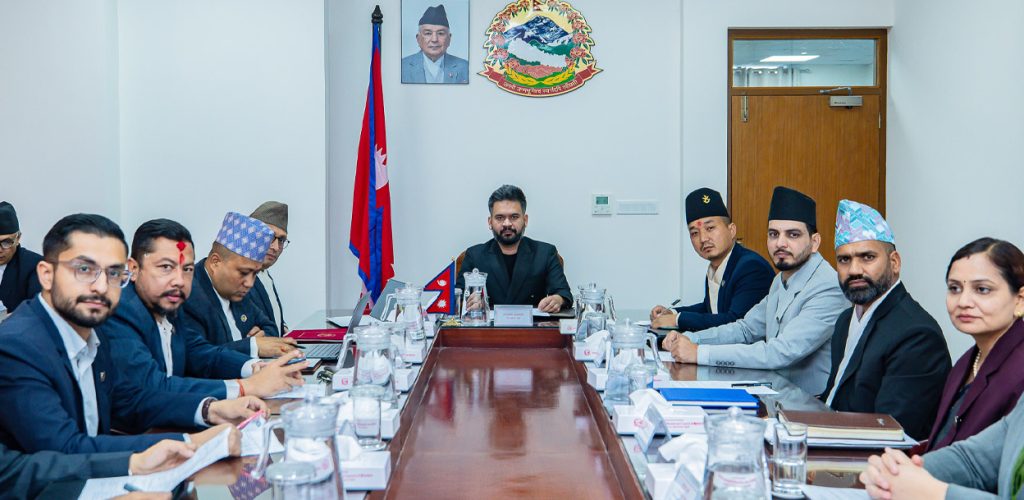
On 22 Chaitra 2082 (April 4, 2026), the Government of Nepal decided to introduce Saturday and Sunday as holidays for schools and government offices.
The Government of Nepal has introduced Saturday and Sunday as holidays for government offices and educational institutions. This Cabinet-approved decision will take effect from Monday.
Minister for Education, Science and Technology, Youth and Sports, and Government Spokesperson Sasmit Pokharel stated that the decision addresses challenges in petroleum supply and aims to reduce fuel consumption. He emphasized that essential services will continue to operate effectively. Office hours have also been adjusted to 9:00 a.m. to 5:00 p.m.
This decision marks a historic shift for Nepal’s education sector. Schools and colleges have traditionally operated six days a week, with Saturday as the sole weekly holiday. The move to a two-day weekend represents a significant change for students, teachers, and parents.
This change amid uncertainty in the energy market supply, partly due to geopolitical tensions, has led many governments to seek ways to reduce fuel consumption. Nepal, which relies on imported petroleum, is particularly vulnerable to these fluctuations.
Education experts note that the decision may have both immediate and long-term effects. An extra holiday could give students and teachers more time for rest, family, independent learning, and personal development.
Research from other countries indicates that balanced schedules support mental well-being, reduce stress, and improve academic performance.
On the other hand, schools may need to revise academic calendars, teaching schedules, examinations, and extracurricular activities to meet learning objectives within fewer school days. Education authorities and administrators are expected to monitor implementation and make adjustments as needed.
Australia, Japan, South Korea, and most European nations observe Saturday and Sunday as regular holidays. In many of these countries, the five-day school week has been in place for decades and is considered an important way to promote student well-being and maintain a healthy balance between education, family life, and recreation.
The government’s decision has prompted discussion among educators, parents, and students. Some welcome more family and study time, while others are concerned about potential disruptions to academic schedules and the quality of education.
As Nepal begins implementing the two-day weekend policy, the coming months will likely determine whetheAs Nepal implements the two-day weekend policy, the coming months will show whether it remains a temporary response to fuel challenges or becomes a permanent feature of the education and administrative systems.
Regardless, this marks one of the most significant changes to Nepal’s school and government work schedules in recent decades, due to rising petroleum and fuel prices. The measure aims to reduce fuel consumption by decreasing weekly commuting and supporting national efforts to manage energy resources more efficiently. Along with the two-day weekend, government offices will operate from 9:00 a.m. to 5:00 p.m. on working days.
The decision marks a significant change in Nepal’s l This decision represents a major change from Nepal’s long-standing practice of observing only Saturday as a weekly holiday.
For decades, schools and government offices have operated six days a week, so the two-day weekend is a notable shift in the education and public administration system. His current fuel situation has also sparked broader discussions about work-life balance, student well-being, productivity, and the possibility of adopting practices common in many countries.
Education stakeholders, parents, and students will be closely watching how the new system affects learning outcomes, school operations, and family life in the months ahead.


