

 Dhruba Prasad Ghimire
Introduction
The internet has transformed communication, learning, work, and social engagement. Students attend online classes, collaborate globally, create digital content, and access extensive educational resources. These opportunities also come with significant responsibilities.
Technical skills alone are insufficient. Individuals must use technology wisely, safely, ethically, and respectfully, making digital citizenship essential.
Digital citizenship is the responsible, ethical, and effective use of digital technologies.
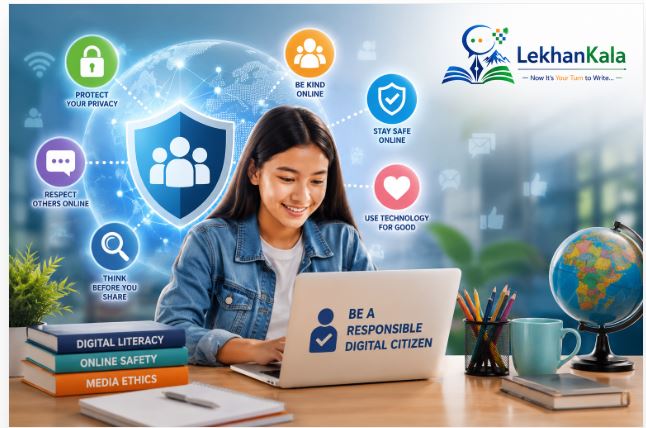
It encourages positive online interactions, privacy protection, respect for others, critical thinking, and meaningful contributions to digital communities.
In today’s connected world, digital citizenship is a vital skill for students, educators, parents, and professionals.
What is Digital Citizenship?
Digital citizenship is the ability to use digital technologies safely, responsibly, ethically, and effectively.
A good digital citizen:
* Respects others online
* Protects personal information
* Thinks critically before sharing information
* Uses technology legally
* Communicates respectfully
* Prevents cyberbullying
* Understands digital rights and responsibilities
* Maintains a positive digital footprint
Digital citizenship is not only about avoiding online risks; it also involves using technology to benefit ourselves and society.
Why Digital Citizenship Matters
The digital world affects nearly every aspect of modern life.
People now:
* Study online
* Shop online
* Bank online
* Apply for jobs online.
* Read the news online.
* Join social networks
* Create videos and podcasts.
* Participate in online communities.
Without digital citizenship skills, individuals are vulnerable to:
* Cyberbullying
* Online scams
* Identity theft
* Fake news
* Privacy violations
* Digital addiction
* Hate speech
* Misinformation
Digital citizenship equips individuals to navigate these challenges confidently.
The Nine Elements of Digital Citizenship
Education experts often describe digital citizenship through nine interconnected elements.
1. Digital Access
Everyone should have equal opportunities to access digital technologies. Access includes:
* Internet connectivity
* Computers
* Mobile devices
* Educational technology
* Digital inclusion
Bridging the digital divide ensures equal access to learning opportunities.
2. Digital Communication
Digital communication encompasses all forms of online interaction.
Examples include:
* Email
* Video conferencing
* Messaging apps
* Social media
* Discussion forums
* Online classrooms
Responsible communication involves:
* Being respectful
* Using appropriate language
* Avoiding harmful comments
* Thinking before posting
3. Digital Literacy
Digital literacy extends beyond operating devices.
It involves:
* Finding reliable information
* Evaluating online sources
* Creating digital content
* Solving problems using technology
* Understanding digital tools
Digital literacy is now as essential as traditional literacy skills.
4. Digital Etiquette
Digital etiquette refers to appropriate online behavior.
Examples include:
* Respecting different opinions
* Avoiding offensive language
* Not interrupting during virtual meetings.
* Giving credit to creators
* Being kind online:
Key principle:
Treat others online as you would in person.
5. Digital Law
Online actions can have legal consequences.
Digital law includes:
* Copyright
* Intellectual property
* Software piracy
* Online fraud
* Identity theft
* Illegal downloads
Respecting digital law protects both creators and users.
6. Digital Rights and Responsibilities Every internet user has certain rights.
These include:
* Privacy
* Freedom of expression
* Access to information.
These rights are accompanied by responsibilities:
* Respect others
* Protect personal data
* Report harmful content
* Follow community guidelines
7. Digital Health and Wellness
Technology impacts both physical and mental health.
Healthy habits include:
* Limiting screen time
* Taking regular breaks
* Maintaining good posture
* Sleeping without devices nearby
* Balancing online and offline life
Digital wellness also includes managing stress associated with social media use.
8. Digital Security
Digital security safeguards personal information.
Good security habits include:
* Strong passwords
* Two-factor authentication
* Antivirus software
* Software updates
* Secure Wi-Fi
* Avoiding phishing scams
Cybersecurity starts with individual responsibility.
Digital commerce involves:
* Safe online shopping
* Secure payments
* Recognizing scams
* Protecting financial information
* Understanding consumer rights
Always verify websites before making online purchases.
Characteristics of a Good Digital Citizen
A responsible digital citizen:
* Thinks before posting
* Verifies information before sharing
* Respects copyright
* Protects passwords
* Communicates respectfully
* Supports others online
* Reports abuse
* Values diversity
* Protects privacy
* Uses technology for learning and creativity
Digital Citizenship in Schools
Schools play a crucial role in preparing students for responsible digital participation.
Students should learn:
* Online safety
* Media literacy
* Ethical technology use
* Cyberbullying prevention
* Responsible social media use
* Information evaluation
* Digital collaboration
Digital citizenship should be integrated throughout all subjects, rather than taught as a standalone lesson.
The Role of Teachers
Teachers should:
* Model respectful online behavior.
* Teach digital research skills.
* Encourage critical thinking
* Promote responsible social media use.
* Discuss online ethics
* Teach copyright and plagiarism.
* Encourage positive digital participation.
Students learn digital behavior by observing adult role models. The Role of Parents
Parents serve as children’s first digital mentors.
* Discuss internet safety regularly.
* Set healthy screen-time limits.
* Monitor younger children’s online activities.
* Encourage open conversations
* Teach privacy settings
* Help children identify misinformation.
* Model balanced technology use
The goal is to provide guidance rather than surveillance.
Digital Citizenship and Social Media
Social media provides opportunities for creativity, learning, and connection, but also presents challenges. Responsible social media users:
* Verify information before sharing.
* Respect privacy
* Avoid spreading rumors
* Report harmful content
* Think before commenting
* Avoid hate speech
* Respect cultural diversity
Every post contributes to a person’s digital footprint.
Understanding Your Digital Footprint
A digital footprint is the trail of information left behind through online activities.
Examples include:
* Photos
* Comments
* Likes
* Videos
* Search history
* Emails
* Online profiles
A positive digital footprint can:
* Improve job opportunities
* Support university applications
* Build a professional reputation.
* Demonstrate leadership
A negative digital footprint may have lasting consequences.
Always consider:
Would I be comfortable if this post were seen by my parents, teachers, or future employer?
Cyberbullying and Digital Citizenship
Cyberbullying involves using digital technologies to harass, threaten, or embarrass others.
Examples:
* Mean comments
* Fake accounts
* Online rumors
* Sharing private images
* Exclusion from online groups
If you experience cyberbullying:
* Do not respond immediately.
* Save evidence.
* Block the person.
* Report the content.
* Inform a trusted adult or teacher.
Creating a respectful digital culture begins with individual choices.
Fighting Fake News
Not all online information is accurate.
Before believing or sharing information:
* Check the source.
* Read beyond the headline.
* Compare multiple reliable sources.
* Verify publication dates.
* Look for evidence.
* Avoid emotionally manipulative content.
Critical thinking is a fundamental digital citizenship skill.
Digital Citizenship and Artificial Intelligence
Artificial intelligence (AI) is transforming education and daily life.
Responsible AI use includes:
* Using AI to support learning rather than replace thinking.
* Verifying AI-generated information.
* Respecting privacy when using AI tools.
* Acknowledging AI assistance where appropriate.
* Avoiding plagiarism.
* Understanding AI’s limitations and biases.
Digital citizens should use AI tools alongside human judgment, creativity, and ethical decision-making.
Tips for Students
* Protect your passwords.
* Think before posting.
* Respect everyone online.
* Avoid plagiarism.
* Verify information.
* Report cyberbullying.
* Be kind in comments.
* Balance screen time.
* Learn continuously.
* Work to build a positive online reputation.
Tips for Teachers
* Incorporate digital citizenship into lessons.
* Teach media literacy.
* Promote respectful discussions.
* Discuss online ethics.
* Encourage collaborative learning.
* Update cybersecurity knowledge.
* Model responsible technology use.
Tips for Parents
* Talk openly about online experiences.
* Establish family technology rules.
* Learn about the apps children use.
* Promote offline activities.
* Teach privacy and security.
* Serve as a positive role model.
Common Mistakes to Avoid
* Sharing passwords
* Posting without thinking
* Trusting every website
* Downloading unknown files
* Ignoring privacy settings
* Spreading misinformation
* Copying content without permission
* Spending too much time online
Benefits of Digital Citizenship
Practicing digital citizenship leads to:
* Safer online experiences
* Better communication
* Stronger critical thinking
* Improved digital literacy
* Greater online confidence
* Positive digital reputation
* Reduced cyberbullying
* Ethical technology use
* Better academic and professional opportunities
Frequently Asked Questions (FAQs)
What is digital citizenship?
Digital citizenship is the responsible, ethical, safe, and effective use of digital technologies.
Why is digital citizenship important?
It helps people stay safe online, protect their privacy, communicate respectfully, and evaluate information critically.
Who should learn digital citizenship?
Everyone—including students, teachers, parents, professionals, and older adults—benefits from digital citizenship education.
What is a digital footprint?
A digital footprint is the record of your online activities, such as posts, comments, photos, and searches.
How can I become a better digital citizen?
Practice respectful communication, protect your privacy, verify information, follow laws, and use technology responsibly.
Conclusion
Digital citizenship is more than a set of online safety rules. It is a mindset that empowers individuals to use technology responsibly, ethically, and creatively. As digital tools shape education, work, and civic life, developing digital citizenship skills is essential for everyone.
Students, teachers, parents, and communities all play a role in fostering positive digital habits. By promoting respect, critical thinking, privacy, security, and empathy, we can help create a digital environment that supports learning, innovation, and inclusion.
Being a good digital citizen means making thoughtful choices whenever we connect, communicate, create, or share online. By doing so, we contribute to a safer, more trustworthy, and more compassionate digital world for everyone.
References
International Society for Technology in Education Digital Citizenship resources
UNESCO Media and Information Literacy resources
Common Sense Education Digital Citizenship Curriculum
UNICEF Guidance on children’s rights in the digital environment
OECD Research on digital literacy and education
