

 Dhruba Prasad Ghimire
“The way we speak to our children becomes their inner voice.”
Parenting is both a grand adventure and a profound responsibility. Along the way, love, hope, and discovery light the path, offering endless chances to shape tomorrow.
Every parent dreams of raising children who radiate happiness, brim with confidence, show compassion, and bounce back from challenges, ready to embrace whatever life brings.
But there is no instruction book for raising a child. Each stage brings fresh questions, surprising adventures, and responsibilities that shift like the seasons.
Today’s parents find themselves raising children in a world that transforms almost overnight.
Children now navigate a landscape filled with smartphones, artificial intelligence, social media, academic pressures, mental health hurdles, and the nonstop hum of digital life.
Parents are called to do more than protect and provide. They must guide, inspire, teach, and prepare their children for a future that is always in motion.
Amid these challenges, one approach stands out as a guiding light for building strong families and nurturing healthy growth:
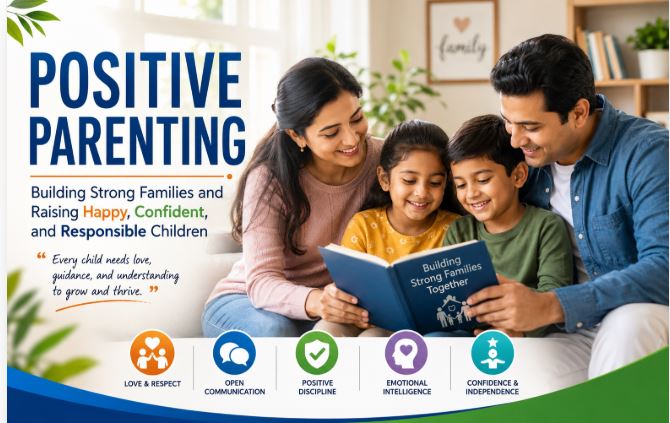
Positive parenting is more than a style; it is a lifelong promise to raise children with love, respect, open communication, empathy, and gentle guidance.
Rather than relying on fear, punishment, or control, positive parenting focuses on building trust, nurturing responsibility, and empowering children with the skills to thrive at every stage.
Understanding Positive Parenting
Positive parenting is based on a simple but powerful belief:
Children learn best when they feel loved, respected, understood, and emotionally secure. It encourages parents to become coaches rather than controllers, mentors rather than managers, and role models rather than dictators.
Positive parenting does not mean saying “yes” to everything or avoiding discipline. Instead, it combines warmth with clear expectations. Children are given consistent boundaries while being treated with dignity, kindness, and respect.
This balanced approach teaches children to develop self-control, responsibility, empathy, and confidence rather than to behave well simply because they fear punishment.
Positive parenting asks an important question:
“How can I teach my child to make good choices instead of forcing obedience?”
The answer lies in building relationships before correcting behavior.
Why Positive Parenting Matters
Parents are a child’s first teachers, first friends, first protectors, and first role models.
Long before children enter school, they learn by observing the people around them. They watch how parents solve problems, express emotions, communicate with others, and respond to challenges.
Every conversation, every hug, every smile, and every moment spent together shapes a child’s emotional development.
Research consistently shows that children raised in supportive, nurturing environments are more likely to:
* Develop healthy self-esteem
* Build strong emotional resilience.
* Perform better academically
* Develop stronger communication skills.
* Build healthier friendships
* Show empathy and kindness.
* Make responsible decisions
* Experience less anxiety, and positive parenting uplifts not just children but entire families. Homes grow more peaceful, bonds deepen, and every conversation becomes a chance to build understanding.
The Five Pillars of Positive Parenting
1. Love Without Conditions
Every child deserves to feel loved, not for their grades, talents, or achievements, but simply because they belong and are cherished as part of the family.
When children feel emotionally secure, they gain the confidence to explore boldly, learn eagerly, and rise above challenges.
Simple acts such as hugs, smiles, encouragement, and spending time together send a powerful message:
“You matter.”
2. Respect Builds Respect
Children learn respect by experiencing respect.
Speaking with kindness, listening with patience, and valuing children’s opinions show them what true respect looks like in relationships.
When parents respect children’s feelings, children naturally become more respectful toward others.
3. Communication Creates Connection
Open communication is the heartbeat of strong families.
Children should feel comfortable asking questions, sharing ideas, discussing fears, and expressing emotions without worrying about criticism or rejection.
Listening is often more important than speaking.
Sometimes children do not need advice.
They simply need someone who truly listens.
4. Guidance Is Better Than Punishment
Punishment may stop behavior temporarily.
Guidance changes behavior permanently.
Positive parenting focuses on teaching children why their actions matter.
Instead of asking,
“Who is wrong?”
Parents ask,
“What can we learn from this situation?”
Mistakes become opportunities for growth instead of reasons for shame.
5. Be the Example
Children copy what they see.
Parents who practice honesty, kindness, patience, responsibility, gratitude, and respect naturally teach these same values. Children remember actions far longer than words.
Building a Strong Parent–Child Relationship
Relationships are not built during special occasions.
They are built during ordinary moments.
Eating together.
Reading together.
Walking together.
Laughing together.
Talking before bedtime.
Helping with homework.
Celebrating small victories.
Listening after difficult These simple, everyday moments weave a tapestry of emotional security.
Children who feel connected to their parents are more likely to cooperate, speak honestly, and reach out for support when life gets hard.
Positive Discipline: Teaching Instead of Punishing
Discipline comes from the Latin word discipline, meaning to teach. Positive discipline helps children understand consequences while protecting their dignity.
Effective discipline includes:
* Setting clear expectations
* Remaining calm
* Explaining the reasons behind the rules
* Encouraging problem-solving
* Using logical consequences
* Teaching responsibility
Instead of saying,
“Because I said so.”
Positive parents explain, “This rule helps keep everyone. Children learn not only what to do, but why their choices truly matter. matter.
Helping Children Develop Confidence
Confident children believe they can overcome challenges.
Parents can nurture confidence by:
* Praising effort instead of perfection
* Encouraging curiosity
* Supporting hobbies and interests
* Allowing children to solve problems
* Giving age-appropriate responsibilities
* Celebrating progress
Confidence blooms with every encouraging word, growing stronger one moment at a time.
Raising Emotionally Intelligent Children
Academic success alone does not guarantee happiness. Children also need emotional skills.
Parents can help children:
* Recognize emotions
* Express feelings appropriately
* Develop empathy
* Manage frustration
* Resolve conflicts peacefully
* Build healthy friendships
Children who develop emotional intelligence often grow into resilient, compassionate, and successful adults.
Positive Parenting in the Digital Age
Technology has transformed childhood. Children now learn, play, and communicate in digital environments.
Parents should become digital guides rather than digital police. Healthy digital parenting includes:
* Creating balanced screen-time routines
* Encouraging educational technology
* Discussing online safety
* Teaching digital citizenship
* Monitoring online activities respectfully
* Keeping communication open
Technology should serve as a tool for learning, never replace the richness of real relationships.
The Importance of Family Time
Family time is one of the greatest investments parents can make. Children rarely remember expensive gifts.
They remember shared experiences.
Reading stories.
Cooking together.
Playing games.
Celebrating traditions.
Taking walks.
Sharing meals.
Talking without distractions. These simple moments plant seeds of trust, deepen communication, and nurture lasting emotional security.
A Love of Learning
Positive parenting encourages curiosity rather than simply chasing high grades.
Parents can inspire learning by:
* Reading together daily
* Visiting libraries and museums
* Encouraging questions
* Exploring nature
* Supporting creativity
* Celebrating effort
* Learning together as a family
Children embrace lifelong learning when it feels like an adventure waiting to unfold, not a burden to bear.
Common Parenting Mistakes
Every parent makes mistakes. Positive parenting is about learning—not perfection.
Common mistakes include:
* Comparing children with others
* Expecting perfection
* Using fear as motivation
* Ignoring emotions
* Spending more time on devices than with children
* Solving every problem instead of teaching independence
Admitting mistakes unlocks the door to growth. Children benefit when parents are willing to learn alongside them.
Positive Parenting Across Every Stage of Childhood
Positive parenting changes as children grow. Young children need love, routines, and gentle guidance. School-aged children need encouragement, responsibility, and opportunities to build confidence.
Teenagers need trust, respectful conversations, emotional support, and guidance as they develop independence.
While children’s needs change, one thing never changes:
Every child needs unconditional love, understanding, and acceptance.
Creating a Home Where Children Thrive
Children flourish in homes where they feel emotionally and physically safe. Parents can create positive home environments by:
* Speaking kindly
* Practicing gratitude
* Reading together
* Solving conflicts respectfully
* Limiting unnecessary stress
* Encouraging creativity
* Celebrating family traditions
* Laughing often
* Listening deeply
A peaceful home lays the bedrock for a child’s future.
Conclusion
Positive parenting is not about raising flawless children or becoming perfect parents. It is about building meaningful relationships rooted in love, trust, patience, and mutual respect.
Children do not need parents who always have the right answers. They need parents who are willing to listen before judging, who guide rather than control, who encourage rather than criticize, and who lead.
Each kind word, every patient conversation, every bedtime story, every shared meal, and every moment of understanding leaves a lasting mark on a child’s future.
When parents choose connection over conflict, encouragement over criticism, and guidance over punishment, they do more than raise successful children. They nurture compassionate people who enrich their families, communities, and the world.
Positive parenting is not simply a method of raising children. It is a lifelong investment in stronger families, healthier communities, and a brighter future for the next generation.
References
- UNICEF – Parenting
- World Health Organization (WHO) – Child Health and Parenting
- Parenting for Lifelong Health
- Harvard University – Center on the Developing Child
- American Academy of Pediatrics (AAP) – HealthyChildren.org
